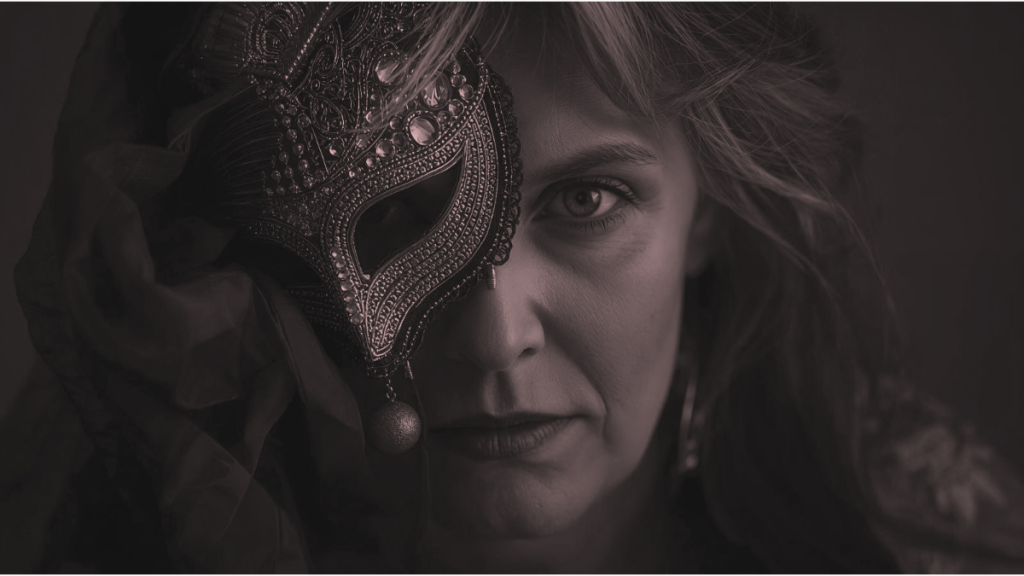
Undiagnosed ADHD, Midlife, and the Moment the Mask Finally Slipped
For most of my life, I looked like I had it together.
From the outside, it was a convincing performance: capable, articulate, responsible, “doing well.” I raised a family, held down jobs, showed up (mostly on time), and managed to pass as someone who coped just fine with the world and ‘did the right thing’. People actually admired me (they said). If there were struggles, they were quietly managed, laughed off, or carefully hidden behind competence and humour.
Midlife, Perimenopause.
Then I hit my early 50s.
The menopause arrived.
And then… everything unravelled.If you’re a woman over 50 who suddenly feels like life has become inexplicably harder and your brain foggier, your emotions louder, your tolerance thinner, you’re not imagining it. And if you’ve found yourself wondering, Was I always like this?, you’re asking exactly the right question.
When the Mask Starts to Crumble
Before 50, I looked “successful.” After 50, I felt like a fraud who’d finally been found out.
The systems I’d relied on for decades of over-preparing, people-pleasing, perfectionism, and laughing it off started to fail me. Tasks that once felt manageable now felt overwhelming. Work relationships became strained in ways I couldn’t quite explain. I was exhausted, emotionally brittle, and quietly panicking.
The menopause didn’t create these struggles. It exposed them.
Oestrogen, it turns out, had been quietly propping up my brain. When it began to decline, so did my ability to compensate. ADHD symptoms I’d unknowingly masked for decades with difficulty concentrating, emotional intensity, anxiety and overwhelm came roaring to the surface.
And the cost of maintaining that facade for so long? Enormous.
Decades of “holding it together” left me depleted. The grief of realising how hard I’d worked just to appear normal was as real as the relief of finally understanding why.
“Oh, I’m Just a Worrier” (And Other Things I Told Myself)
Looking back, the signs were always there. I just didn’t have the language or the permission to see them.
I was “a worrier.” We laughed about it. I laughed about it. Anxiety was framed as a personality quirk rather than a signal. “You’re just like your Mum”, Grandma….whoever.
I hid behind sibling friendships. With my family, I felt safe. They understood how I was. They’d always known me as intense, sensitive, deep, distracted. At home, I didn’t have to explain myself. Outside that bubble, especially at work, relationships felt much harder. I never quite knew which version of myself was acceptable in this unfamiliar world.
I was an early reader and writer, praised for being bright yet socially awkward. I could hold adult conversations from a young age, but playground dynamics baffled me. I didn’t struggle academically, so no one looked any deeper. Gifted kids, especially girls, rarely do get looked at twice.
And then there’s the moment that still stops me in my tracks.
I remember saying to my mother when I was about six years old:
“You can never really stop thinking, can you Mummy?”
At the time, it sounded like a philosophical observation. Now I hear it for what it was: a small child trying to understand why her mind never, ever switched off.
The Late Realisation No One Prepares You For
Realising in your 50s that you may have ADHD is so disorientating. It’s not just a diagnosis, it’s a re-edit of your entire life story.
Suddenly, moments you’d labelled as “failures” make sense. The emotional intensity. The burnout. The sense that everyone else received a rulebook that you somehow missed.
And there’s anger too. Anger that no one spotted it. Anger that you didn’t spot it. Anger that women of our generation were expected to have it all — to succeed at work, raise a family, keep everything running smoothly, at a time when that ideal was sold as empowering, even as our mothers quietly warned us it wasn’t realistic. We were encouraged to prove them wrong, to stretch ourselves thinner, and to cope quietly, smile politely, and be grateful.
But alongside that anger is something unexpectedly gentle: validation.
You weren’t lazy.
You weren’t dramatic.
You weren’t imagining it.
You were adapting. Surviving. Masking.
Menopause: The Final Straw (and the Final Clue)
Menopause has a way of stripping things back. Patience thins. Energy dips. Tolerance for nonsense evaporates. For women with undiagnosed ADHD, this can feel like everything falling apart at once.
But what if it’s not falling apart?
What if it’s finally making sense?
The loss of hormones doesn’t create ADHD, it simply removes the scaffolding that helped you cope. When that happens, the truth becomes harder to ignore.
And maybe that’s not a failure. Maybe it’s an invitation?
If This Sounds Like You…
If you’re reading this and nodding along, half relieved, half unsettled, know this: your experience is real.
You didn’t suddenly become “bad at life” in your 50s. You became tired of pretending. You became hormonally unsupported. You became honest with yourself in a way you’d never been allowed to be before.
There is no shame in a late realisation. There is only understanding, self-compassion, and the possibility of doing things differently now.
And perhaps, finally, permission to stop thinking you’re broken and start recognising how incredibly hard you worked just to get here.
You’re not alone 🤍
Read another blog: The Day I Realised it Wasn’t “Just Me”
If this resonates, you’re welcome to share your thoughts in the comments below. Your experience might help someone else feel less alone 🤍
 The Invisible Struggle
This is a moderated, respectful space. If this article resonates with you, you’re welcome to share your reflections below. Your experience may help someone else feel less alone. You’re welcome to comment using a nickname. Your email address is never published or shared — it’s only required to help prevent spam and keep this space safe.